Marketing Insights from a Pandemic

There’s so much that could be written about lessons learned this year, many of them as unexpected as COVID-19 itself. I was talking with the CIM team last week about that topic, and the conversation turned to specific marketing lessons learned. Take a minute to reflect on these:

Having strategic, business, and marketing plans is vital, but plans cannot be set in stone. While they serve to keep you focused and on track, it’s critical to be able to flex as the business and competitive landscape shifts. We didn’t just have a shift, the ground fell out from underneath us! In many cases, we learned to reinvent ourselves, our products/services, and our core ways of working. We didn’t just slightly correct course, we pivoted and did 180s and back again!


Having strategic, business and marketing plans is vital.
The human connection is vital.

The human connection is vital. We learned new ways to connect with family, friends, and clients. From simply letting clients know “we’re still open to serve” to announcing operational or service changes, it became more important than ever to communicate, frequently, with our target audiences.

Downturns have their upsides. It has been a strategic time to invest in marketing. Similar to during the Great Recession a little more than a decade ago, media rates dropped significantly and some companies have been able to afford certain advertising opportunities for the first time. Historically, studies have proven that firms that invest in marketing during a downturn (especially while competitors cut back) come out ahead – in brand awareness and business growth – in the years following the downturn.


Downturns have their upsides.
QR codes are making a comeback!

QR codes are making a comeback! Yes, several years back, QR codes hit the scene with a splash, then we saw them start to fade away. However, with most new mobile phones incorporating QR code reader technology within their cameras, coupled with our new “touchless” obsession, we’re seeing QR codes’ resurgence. Enter just about any restaurant, and you’ll see “Scan here to view our menu.”

We’re not done yet. No, we’re still learning and growing and managing to succeed despite all the challenges. I truly hope your efforts are paying off to stay safe and healthy, keep your family, friends, colleagues and clients as your focus, and adjust your business model to ensure continued success.


Quote of the week:

Life can only be understood backwards; but it must be lived forwards.

Soren Kierkegaard

Ready For 2021 Reboot!

What a year it has been. Summer’s gone. Cooler temps are finally here. Thanksgiving is around the corner, and December will be filled with holiday activities. That makes now the perfect time to prepare for and lock in an effective 2021 strategic marketing plan and budget.

What’s in it for you? By planning now, you’ll…

  • Avoid entering the new year with no plan, leaving you to only react to opportunities that may appear.
  • Get the whole team on board with where you’re headed, why you’re headed that way and how everyone can contribute to getting there.
  • Save marketing dollars by working with your marketing/PR agency to identify and evaluate the best opportunities (those with the greatest ROI), as well as potentially lock in lower 2020 media rates into 2021.

Investing in planning now will allow you to more fully enjoy the remainder of this year and help ensure a more profitable, more focused, and less stressful 2021. After reading the next few sentences, switch screens on your computer to see your calendar. Block off several hours with others involved in your marketing decision-making process and plan for a review of your business and the competitive landscape.

Now is the time to take the time to work through important questions and begin to develop your strategy for 2021 marketing:


We suggest you work through this “reflection and review” as a starting point to nail down a true strategic approach for 2021. If you need help, ask for it! Working with a team like CIM Marketing Partners can put you on a more solid path to growth and prosperity, while at the same time freeing YOU up to focus on what YOU do best (like operationalizing your company’s products and services, and providing superior client service and experiences).

With your plan in place (and the ability to adjust it as needed in our current environment), you’ll experience marketing efforts working behind the scenes to improve profitability and ultimately build the value of your company.


Quote of the week:

Planning is bringing the future into the present so that you can do something about it now.

Alan Lakein


Only 58 Working Days Until Christmas!

We’re getting close to that time of year when many companies reach out to those who mean the most to them: Their clients, their referral sources, and their preferred vendor partners. For some, it means sending a holiday card (physical or e-card) and/or a holiday gift.


If you choose to send a gift,
here are some tips to keep in mind:

Choose a single gift or a collection of smaller items that are meaningful and useful.

You may want to create a theme and follow that, including on the card or in messaging that accompanies the gift.

Many companies create several levels of gifts (with corresponding costs), with perhaps the highest level going to your most significant clients or referral sources, a mid-range gift for moderate-size clients and something nice for others.

We do not recommend over segmenting into too many groups, as this becomes cumbersome and more difficult to orchestrate.

Presentation is important.

Whether hand-delivered or mailed, take time to wrap or package it so it makes a nice impression on the recipient.


Your firm logo may or may not have a place.

On sticky notes and low-end pens, sure, your logo is fine. Some of the nicest, longest-lasting and most used items I’ve received over the years do not have logos on them, but you can bet I remember who gave me those items (a leather padfolio or a business travel bag, for example).


In advertising, we try to stand out while avoiding the fray, instead showing up when there’s less competition for one’s attention.

After Thanksgiving, you may have noticed your company break room becomes filled with a number of incoming gifts, further blurred by your own extra busyness of the season. That’s why since I started my company in 1996, we’ve been sending holiday cards and gifts each November just before Thanksgiving.


A Note About Food Gifts and COVID

If you’ll be giving food items to a group or an entire office, make sure those items are individually wrapped – forego the whole cake this year, instead opt for individually wrapped or packaged serving sizes. It might increase cost a bit, but this will ensure your holiday treat will be enjoyed by the recipients.

We just entered October, so it’s time to make up your lists and gather your thoughts on how you’ll be touching those you care about and appreciate. If you need any assistance, please reach out.


Quote of the week:

The excellence of a gift lies in its appropriateness rather than in its value.

Unknown


So, You Think You Know Your Target Audience...

A foundational mistake is assuming that you KNOW your clients, that is, what they want, what they expect, how they view your brand, etc. Sure, you have a good idea, but it goes deeper than that. One marketing tactic that we have always supported is focus group research. Let’s briefly review what they are and how they are orchestrated, as well as share some real-life examples we have “lived” in years of performing this research.

Focus Groups Defined

Between 10-12 individuals are recruited to physically meet at either a research facility or other suitable location to gather in a room to discuss a topic and share their insights. These “respondents” or “participants” may or may not know who is funding the research. For example, the group could be current and/or past clients of a particular company and they would, obviously, find out who is behind the research. Conversely, if you’ve gathered a group to discuss what financial management software clients need, want, and use (because you sell such software), the respondents would likely not be told which company is behind the research. Detailed, non-leading questions and discussion points are painstakingly outlined and used by a facilitator during the two-hour session.

What Is Learned And How is It Used?

CIMply put, a plethora of useful information is gathered. Companies learn specific buying habits, how buying decisions are made, how their companies and competitors are viewed (branding), what consumers want and need in services/products, and on and on. Focus group findings can be used across the board at a given company:

  • Where and how to most effectively advertise and market the company
  • What product or service differentiators to include, expand or promote
  • Which product or service features and benefits to expand or integrate
  • How to steer the company’s strategic plan and its diversified marketing approach

Wow Moments, And “Great Ideas” Gone Awry

We’ve done a number of focus groups in multiple states and industries, and there have been wow moments at each. A sampling:

A large financial services firm envisioned creating a “one-stop-shop” under its roof, bringing together CPAs, attorneys, and financial advisors to jointly share information and services about their clients. When we pulled together a group of their actual current clients (all high-net-worth individuals), the idea was outlined (with the perceived benefits), and within minutes, it was clear that there was huge resistance to the idea. The overwhelming response? “I don’t want my CPA to be talking to my lawyer or my financial advisor. I would pull my accounts if someone wanted me to work that way.” Ultimately, the plug was pulled on what would have been a complex and expensive business model to create, saving countless dollars and heartache.

A decades-old company in the automotive services realm had us hold three focus groups to identify motivators for choosing one company over another. The unexpected twist was that the majority of the respondents said they had never heard of our client’s company when we discussed the brand image of several competitors and our client’s company. Turns out, when the client had reached the pinnacle of name recognition in the late 1990s, it pulled most marketing. “Everybody knows us now, business is good. Let’s cut marketing.” What they didn’t take into account were the 6,000 people per month moving into the city, people who had no way of knowing about this established brand.

The information that can be gathered from this formal research can be incredibly useful. We have yet to hold a focus group that didn’t ultimately pay for itself many times over by strengthening the company, increasing revenue, improving the client experience/satisfaction, etc. If you’d like to discuss investing in focus group research, we’ll share all the details and work with you to uncover hidden gem information.


Quote of the week:

Research is creating new knowledge.

Neil Armstrong


The Human Spirit

Last weekend, I visited my daughter in Southern California, right in the middle of some of the most stringent COVID restrictions in the country. Businesses are hurting. Their business models destroyed. Layoffs and permanent closures at every turn.

What I didn’t expect, though, was to be inspired. And inspired, I was! At every turn, the human spirit was apparent. Business owners were determined to make the best of it, to stay afloat, to keep their employees employed…to survive.

We walked past a nail salon that couldn’t invite patrons inside. They had set up tables and chairs on the sidewalk, and all the equipment needed to do one’s nails. Extension cords flowed from inside the building. All these temporary “work stations” were fully functional and filled with customers.

Next, we found ourselves looking for a restaurant. This wasn’t easy, as all restaurants in the region are prohibited from serving in their dining rooms. Many have built platforms going from the restaurant buildings out toward the street and placed tables, appropriately spaced, to meet government guidelines. This “new” style of restaurant was everywhere, some operating with tables under tents in parking lots. All of the surviving restaurants seemed to be running at full outdoor capacity. The next available seatings were typically after 9:00 PM… make that reservation! Take a look at the photo. Never did I think I’d be having a meal with my daughter, seated next to a parking meter.

We humans are programmed to be productive, to be successful, to find a way. We find ways to stay alive, to take care of ourselves, our families and those in our lives.

This visit showed the entrepreneurial spirit at its best, and it brought some hope that has sometimes been hard to find in these COVID times. I remain inspired by the human spirit.


Quote of the week:

There are no constraints on the human mind, no walls around the human spirit, no barriers to our progress except those we ourselves erect.

Ronald Reagan

Managing Your Brand: Design 101

It’s all around us: Bad graphic design. Whether on a billboard, on a website, or in your mailbox, you know it when you see it. One of my team members even keeps a “Marketing Mishaps” folder filled with examples from over the years, just for fun. Thankfully, there are some rules of thumb to help you avoid design blunders and properly manage your brand. Here are a few:

Trust a talented designer. You’ve invested a lot in your brand, the visual part of it. Your logo, tagline, branding elements, colors, and brand standards/usage guidelines are the foundation pieces. With those in place, it’s up to a pro to know how to use them as a part of extending your brand, creating your brand presence effectively. A designer gets to understand your brand and knows how to artfully balance design and verbiage to propel your message.

Less is more. The recipient will remember your message when you communicate it CIMply and clearly. You don't have to display all brand elements in every instance just because you have them.

While you may have built a treehouse in the backyard, you wouldn’t try to build your new home yourself. True designers have innate talent and training to use tools to pull it all together.

Stand out. When looking head to head at competing products and services, you want to best the competition’s offerings. How you do this is by having well-conceived, graphically pleasing designs that reach this goal. A designer knows how to accomplish this for you.

Don’t forget the family. Your brand family, that is. Your brand footprint is ever-expanded by using your brand elements everywhere you have a presence. Your printed marketing materials should match your digital marketing efforts. Whether one visits your website, views your social media pages, or receives an email or actual mailpiece from your company, it should look and feel like it’s something about your company.

Brand consistency doesn’t happen by itself, but must be managed, and that ultimately helps lead to a higher trust in a brand: “I know this company, I recognize this company, I like doing business with this company.” Think about Apple, for example. When this company touches you with a message, do you almost instantly know it’s Apple?

Investing in good design pays for itself in spades through building your competitive advantage, elevating your company’s products and services above others, increasing actual sales and revenue and, ultimately, driving marketing results. Step one: Make sure it’s being effectively led and managed by someone or a team you trust.

Happy Labor Day!

Quote of the week:

…knowing how to use a design or art software doesn’t make you a designer.

Adri M.

Watch Now vs. Read More

For years, we’ve been encouraging and helping our clients to incorporate video content into their marketing mix – website, email marketing, social media platforms, and online advertising. Research continues to show an increase in the number of people who, given the option of watching a video or reading information, choose video. A few statistics:

In addition to well-written content, video is another touchpoint with significant benefits. Videos are natural attention grabbers. Their movement draws people in to watch and learn more. Search engines love video and typically return search results of video higher within the rankings, making your website (and its videos) more likely to be discovered.

What types of videos might you consider creating?

Talking heads or interviews:

These videos can be a person simply talking about your company, a service or practice area, or two people discussing a particular topic. The content should ultimately focus on the viewers, that is, offering to help them with something they need, or providing a solution or answers.

Explainers or “doodle”:

These animated or sketch videos literally draw a picture while telling a story, describing how something works or walking the viewer through a process. Keywords typically appear within the video, which is narrated throughout.

Testimonials

Testimonials:

These videos feature actual customers or clients talking about their experiences in working with your company.

Demonstrations:

These videos feature the use of a product or “how-to” to illustrate how something is done or used. These are along the lines of explainer videos, but used when providing a detailed walkthrough on using a product or navigating a process.

The most impactful videos are engaging, entertaining and informative. While a mix of video lengths is appropriate (longer for certain purposes), with the shorter attention span of many people today, short videos (under 90 seconds) have a higher chance of being viewed to the end. Even shorter videos (under 15 seconds) may be required for online advertising to very quickly make a point and encourage a click-thru to your website to learn more.

If your marketing efforts don’t include video, it’s a missed opportunity to connect with your target audiences, to let them hear and see what you do and how you help clients. If you would like to discuss how video can be effectively created and incorporated into your marketing efforts, please reach out.


Quote of the week:

Business decision makers LOVE online video because it gives them the most amount of information in the shortest amount of time.

Robert Weiss, Use YouTube Video Marketing to Generate Leads, Awareness and Customers


Getting Social With It

Are you feeling overwhelmed by social media? For businesses, over the past few years, it has become a necessity to establish and maintain a presence on various social media platforms. Especially now, in a time where an in-person conversation is not always possible, many have turned to social media as a way to communicate directly with their audience. Some companies have reluctantly been forced into social media, simply because this is where people are these days. Others have embraced these new communication channels as additional avenues to build awareness and attract clients. Here are a few “lessons learned” from our team, who is immersed in the social media landscape. They have become guiding principles to avoid becoming overwhelmed, allowing us to focus resources most effectively.

CHOOSE WISELY:

For the past few years, my social media team and I have attended Social Media Marketing World, one of the largest social media conferences in the country. From them, we learned that you fail at social media by trying to be active everywhere and not giving any of them your all. Instead, you should pick one or two and be REMARKABLE on those platforms. Choose the ones that make sense for your company. Where are your current and potential clients interacting? What are their demographics? Match your efforts to your audiences.

MAINTAIN ACTIVITY:

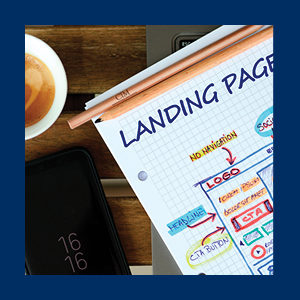
If you’re going to have a presence on a particular platform, do so with intent. Beyond building out your landing page to reflect (graphically and content) your brand, plan regular new content and posts, and stick with it. Avoid the bad impression that results from a client or prospect seeing that you haven’t had any activity in the recent past. Build out a content calendar for posts and react/reply to posts of others on your pages.

PROVIDE VALUE:

Visitors to your pages should experience content that resonates. There should be a good mix of posts: Consider product/service updates, testimonials, team member profiles, client stories, and special events. Each post should connect in some way with visitors, making them feel a part of your company. Your presence on social media platforms is an opportunity to further enhance and manage your overall brand and its reputation. Planning and managing your efforts will help you avoid feeling overwhelmed and overworked.


Quote of the week:

We don't have a choice on whether we do social media, the question is how well we do it.

Erik Qualman


Look Good + Sound Great = Success!

YOU’RE LOOKING GOOD, OR AT LEAST YOU SHOULD BE

Just as most people like to present themselves in a good light, positioning your brand to make a positive impression takes work. In fact, the way your business presents itself plays a key role in how you’re received by your target audience. An overall aesthetic that’s sharp, eye-catching, modern, and memorable will help promote your brand and ensure your business is top of mind when it needs to be. That must be accompanied by great content. Beyond your website, here are three (out of many) areas to review and potentially upgrade:

YOUR LOGO/BRAND MARK

Your logo is a visual representation of your brand. A clean, sharp logo will set you apart, help tell your brand’s story and become ingrained in the minds of your intended audience. Your brand’s logo should be unique and play well with all media. It should make a statement and let your audience know about your business. Think about the Nike Swoosh. It’s memorable, it creates interest, and it has become synonymous with the brand and the company name.

A great logo is versatile; it should look just as sharp on your business card as it does on a highway billboard. If your logo doesn’t convey the “brand promise” it should, or if it’s simply time for an update, make that a priority, as your logo/brand mark is truly the foundation piece for so many marketing components.

YOUR MARKETING COLLATERAL

We hear it often: Do we need printed marketing materials? Our answer: YES! Every business has a need for sales materials. Most of the pieces we create for clients end up as PDF files being used as email attachments and for downloads from a website, as well as commercially printed copies for hard-copy mail-outs and use at events and in-person meetings where a tangible leave-behind still has value. Fewer hard copies (as compared to years past) need to be printed, but when a “wow” marketing piece is needed to make that first impression, you’ll have it.

All marketing pieces should be fully branded with your company’s colors, logo and brand marks. Regarding content, the verbiage should be friendly, informative and “speak” to the reader, focused on WIIFM, “What’s In It For Me?” Sure, the piece will contain background information about your company and its products/services, but it’s also critical to provide details about what you do to help companies, how you solve their pain points and how you provide immeasurable value to those you work with.

YOUR SOCIAL MEDIA FLAIR

While written content is incredibly important for your social media marketing strategy, we also believe the visual elements are equally as critical. A link to a well-written blog post may go unclicked if the accompanying visual graphic is uninteresting. An article may go ignored, where a video may capture the intended audience. A crisp and original animated graphic may stop the scrolling thumb in its tracks. An informative data visualization or infographic may provide jaw-dropping statistics in an easy-to-digest visual format.

The visual assets on social media help catch your audience’s attention. Draw them in with the design and then hook them with your exceptional written content! Make sure your written message lines up well with your visual message, to ensure everything is clear and concise. Whether you want to close the deal on a social media platform or funnel your prospects to your website, the visual design elements can be wildly effective bait.

Brand positioning has so many facets, including graphics, colors and branding elements that help paint the picture of your company and what your team does. If you would like to discuss strengthening your brand, let’s talk. Our team takes pride in doing that every day.


Quote of the week:

Your brand is the single most important investment you can make in your business.

Steve Forbes


Company Culture – Is it Important?

Often lost in the discussion about running a company is taking the initiative to foster and develop a positive company culture, which has an impact on all other facets of your business. A company’s culture distinguishes the values, goals, and attitudes of the employees that make up a business. When individual and company-wide values align, workers feel more appreciated and valued for the work they do in furthering company objectives. Productivity, profitability, and professionalism trend upwards when the company culture is strong and healthy, as their image of success shines amongst competitors, creating a competitive advantage.

Company culture actually has a snowball effect on the health and well-being of a company. As company culture improves, the productivity of happy employees increases, which then increases the financial health and overall profit of the company. A company’s productivity measures the effectiveness and efficiency of employees within the company, directly correlating to the success and completion of their objectives punctually.

As times change and technology advances, millennials are brought into companies to keep up with the everchanging and updated technology incorporated in company operations. Millennials are the “new” driving force powering the future of the workplace. The discussion of strong, compelling culture within a company can either attract or deter the millennial audience. You’ve most likely heard or experienced firsthand that millennials want to feel like their work matters, enjoy the time they spend accomplishing even the most mundane tasks and believe they are furthering the greater good in the world surrounding them. A strong company culture, and recognizing their roles in it, allows them to better recognize the values and goals of the company, drawing the connections to the outward impact it carries into society.

The importance of company culture resounds in a business’ success. Company culture weighs tremendously on the productivity, profitability and professionalism of employees and the company as an ensemble. If the culture is unhealthy or lagging, employees prioritize duties that will meet their own needs, such as moving up the corporate ladder or improving their salary and benefits. This is due to the fact that the workforce does not feel like they or their efforts are valued by management.

Appreciating and valuing employee efforts, no matter how big or small they are in a particular project, can contribute to the establishment of healthy company culture practices. By focusing efforts on culture, you are establishing a differentiating factor from competitors who foster poor or nonexistent company culture as they focus too much on the success of the business as a whole, not leaving time to motivate or admire the efforts of those within the company. Creating a foundation of positive company culture, one in which employee engagement organically promotes productivity, can help make or break the success of your company.

There are many well-known companies that excel in the promotion of their company culture. Two examples:

Zappos has become almost as reputable for its company culture as it is for product and customer service. Ten key core values are instilled in each employee as they are hired and trained. Amidst the fast-moving operations of their business, Zappos takes time to budget and plan specifically for team-building, as well as internal culture promotion. This is done to encourage their employees and assure them of the impact their efforts make on the success of the company.

Google not only offers employees a fun working environment and substantial benefits to being a part of their team, they prioritize a strong culture of leadership and mentorship to help their employees succeed. By creating a workspace where people can and want to grow, they attract some of the best talents in the industry and express the worth of their efforts. In terms of strong company culture, both Zappos and Google have taken the initiative to hire people with company culture fit in mind.

How would you define your company culture, and is it a positive one? What are you doing to promote a healthy company culture? It’s not something a leader does alone, but something the entire team needs to be a part of.


Quote of the week:

Customers will never love a company until the employees love it first.

Simon Sinek, Author, Start with Why