OTT Advertising vs.TV Advertising: Who Rules the Screen?
In the rapidly evolving landscape of digital marketing, choosing the right platform to reach your target audience is crucial. Two prominent channels that often come under consideration are OTT (Over-The-Top) advertising and traditional TV advertising. Each has its own set of strengths and challenges, and understanding these can help you make an informed decision that aligns with your business goals. Below, we’ve outlined the pros and cons of both OTT and TV advertising, highlighting their effectiveness in today’s market.
OTT Advertising
PROS
1. Targeted Reach
OTT platforms offer unparalleled precision in targeting specific demographics, interests and behaviors. This allows advertisers to deliver personalized content to viewers who are most likely to be interested in their products or services.
2. Measurable Performance
One of the significant advantages of OTT advertising is its ability to provide detailed analytics. Advertisers can track viewer engagement, impressions, click-through rates and conversions in real-time, making it easier to measure ROI and adjust strategies accordingly.
3. Flexible Budgets
OTT advertising typically offers more flexibility in terms of budget. Advertisers can choose to spend as much or as little as they want, with options to adjust spending based on performance metrics.
4. Cross-Device Exposure
With OTT, ads can be delivered across multiple devices, including smartphones, tablets, laptops and smart TVs. This multi-device reach ensures that your brand stays top-of-mind as viewers switch between screens.
CONS
1. Fragmented Audience
While OTT platforms allow for targeted advertising, the audience is often fragmented across numerous streaming services. This fragmentation can make it challenging to achieve the same broad reach that TV advertising offers.
2. Ad Skipping
Many OTT platforms offer users the option to skip ads, which can reduce the effectiveness of your campaigns. This is particularly relevant for platforms that offer premium, ad-free experiences.
3. Complexity
The variety of OTT platforms and the rapidly changing landscape can make it complex to navigate and optimize campaigns. Keeping up with trends, new platforms and evolving user behaviors requires continuous effort.
TV Advertising
PROS
1. Broad Reach
Traditional TV advertising remains one of the most effective ways to reach a large and diverse audience. Prime-time TV shows and major events like sports championships attract millions of viewers, providing unparalleled exposure.
2. Credibility and Trust
TV ads are often perceived as more trustworthy and credible than digital ads. The established nature of television as a medium gives it a level of authority that can enhance brand reputation.
3. Impactful Storytelling
The visual and auditory elements of TV ads, combined with longer ad spots, allow for impactful storytelling. This can be particularly effective for brand-building campaigns.
CONS
1. High Costs
TV advertising is typically more expensive than OTT, especially for prime-time slots or major events. This can be a significant barrier for smaller businesses or those with limited marketing budgets.
2. Limited Targeting
Unlike OTT, traditional TV advertising offers limited targeting options. Advertisers can choose channels and time slots that align with their target demographic, but the precision is far less than what OTT platforms provide.
3. Difficult to Measure
While TV ads can be powerful, measuring their direct impact is challenging. Traditional metrics like ratings and impressions don’t provide the same level of insight as digital analytics, making it harder to gauge ROI.
Both OTT and TV advertising offer unique advantages that can be highly effective depending on your marketing objectives. OTT advertising excels in precision targeting and measurable results, making it ideal for performance-driven campaigns. On the other hand, TV advertising offers unmatched reach and credibility, which can be crucial for brand-building efforts.
Ultimately, the choice between OTT and TV advertising should be guided by your target audience, budget and campaign goals. In many cases, a balanced approach that leverages the strengths of both platforms may offer the best results.
If you would like to discuss how these strategies can be tailored to your specific needs, contact our team of experts at CIM Marketing Partners.
The Future of Analytics is Here
Embrace Google Analytics 4 for Enhanced Insights
The countdown is on! Google has announced the sunsetting of Universal Analytics on July 1, 2023. If you haven’t set up, or if you haven't asked your webmaster to set up and install Google Analytics 4 (GA4) on your website, you only have a little bit of time to get it done. (Note: If CIM is your webmaster, rest assured we have been utilizing GA4 since its announcement running parallel to Universal Analytics on your site.)
While Google lists numerous reasons for the change, the biggest one is to comply with increasing regulations and laws regarding online user privacy. GA4’s enhanced data privacy features align with evolving regulations and user expectations. With GA4, businesses and marketers can easily configure data collection settings, ensuring compliance with privacy laws while maintaining accurate tracking. This helps foster trust among users and strengthens data governance practices.
This property will stop processing data starting July 1, 2023.
GA4 can bring numerous benefits to businesses of all sizes. With its advanced features and improved tracking capabilities, GA4 offers valuable insights that can drive data-informed decision-making and enhance overall marketing strategies.
1A major advantage of GA4 is its ability to provide a comprehensive view of user behavior across multiple devices and platforms. Traditional Google Analytics focused primarily on website data, but GA4 incorporates data from websites, apps, and other digital touchpoints, including social media platforms, email marketing, live chat, chatbots and voice assistants. This holistic approach enables businesses and marketers to understand the complete customer journey and make informed decisions to optimize user experience.
2GA4 has enhanced event tracking capabilities. Unlike its predecessor, GA4 places greater emphasis on event-based data collection, allowing businesses and marketers to track specific user actions, such as button clicks, form submissions, purchases, and video plays. This granular data empowers marketers to analyze user engagement and identify opportunities for improving conversion rates and user retention.
3GA4 introduces machine learning models that provide valuable insights without requiring complex configurations. The AI-powered insights feature in GA4 can automatically identify trends, anomalies, and opportunities within the data, saving time and effort for marketers. These insights can uncover valuable information about user preferences, allowing businesses to optimize their marketing efforts and tailor their campaigns to specific target audiences.
4GA4 offers a streamlined reporting interface that presents data in a more intuitive and user-friendly manner. The updated interface allows for easier customization of reports, making it simpler to extract the desired insights. The improved data visualization options and built-in data exploration tools further facilitate data analysis and interpretation. The one shortcoming is its reporting. The ability to easily print or create PDFs of its dashboard is limited. A third party platform like Looker Studio is recommended in order to format the data in an easy to digest format.
5GA4 allows businesses to future-proof their analytics setup. Google continues to invest in GA4 as its standard analytics platform by making it scalable, flexible, compatible with evolving standards, advancing machine learning, and data governance and security.
The benefits of switching to GA4 are clear. Its comprehensive view of user behavior, enhanced event tracking capabilities, AI-powered insights, data privacy features, streamlined reporting interface, and future-proofing potential make it a valuable tool for businesses and marketers seeking to leverage data for informed decision-making and marketing success.
The above information offers a glimpse of the depth of details and ever-changing digital landscape our team lives in each day. If you’d like to discuss assistance with your marketing needs, please reach out to me at dneighbors@cimmp.com or 702.944.2464. Thank you.
Simplify Event Planning with Our Innovative Event Management Solutions
Anyone who is in charge of putting together even a small event quickly learns the task is much more substantial than one might think. There is a lot to consider, and dozens upon dozens of details to be thought through and planned.
Since our founding more than 26 years ago, we have conceived and planned hundreds of events for our clients, ranging from open houses to full-blown national conferences with hundreds of attendees. We are proud to have pulled off brand building, successful events that have been meaningful to attendees and the clients themselves.
Now, we’ve opened up our event planning and management services to anyone.
Please visit our new event services landing page on our website to learn more about how we approach planning an event and examples of all the facets of making the event a complete success.
If you’re considering an event of any kind, our expert event management team can help you unlock the full potential of that event. If you have any questions or would like to learn more, please reach out to me.
“To create something exceptional, your mindset must be relentlessly focused on the smallest detail.”
~Giorgio Armani
The Next Big Thing
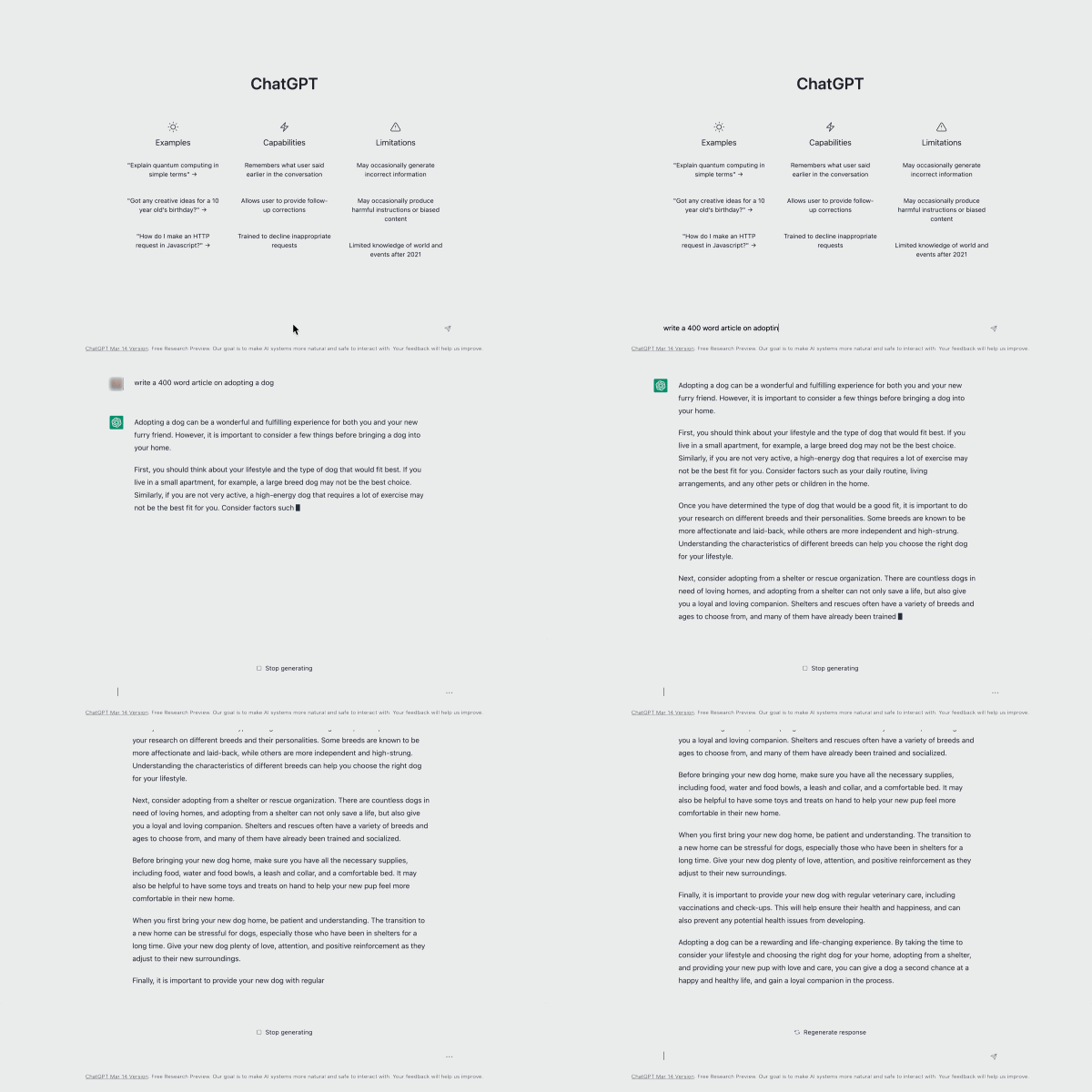
If you’ve watched the news, seen the internet or received emails in the past few months, you’ve likely heard and seen a LOT of buzz about a new generation of artificial intelligence (AI) content automation platforms backed by companies like Microsoft, Amazon and Google. ChatGPT seems to have gotten the most attention. Think of them as content generators. You go to the platform, open an account and tell the system what you want. “Create a 400-word article on adopting a dog, and include five major points to consider.” Within seconds, you literally see the content being developed, appearing before you in real time. It truly is an amazing experience. No human could accomplish that in such a short time.
Beyond ChatGPT and its competitors, which focus on creating written content, other platforms can create drawings, images, music and even videos based on your request. Some of these platforms are in beta testing; others are already charging via subscriptions.
What does this mean for you? The short answer is, we’ll have to see. It appears to be a revolutionary jump in capability. Some see it as a disruptor. One news story on NewsNation predicted such systems will generate millions of fake reviews for companies, products and services, with unscrupulous players uploading and flooding review platforms with them.
For nearly every client we serve, content is king. We need content for virtually every marketing tactic we roll out, maintain or manage on a day-to-day basis – brochures, social media posts, new website pages, blog articles, newsletters, email campaigns and on and on. We have multiple team members creating such content daily, and other content is written and provided by our clients, who may have very specific, subject matter expertise.
At this point, we’re seeing the initial capability and use of such AI may be a terrific starting point. Back to our example, someone may be able to use parts of the generated content to create an e-newsletter. But writing pros will tailor it to become a more personal message about a local shelter. They’ll add in a quote from the shelter’s director. They’ll add a testimonial from a happy family. While the system chose five major points to consider, the writer will know that there are two even more important bullet points to include instead.
Part of the reason we develop so much content (beyond to attract and inform potential clients) is to help with online search results, our clients’ websites and content rankings. We’ve learned that Google’s algorithm is being tailored to sniff out AI generated content and may even “punish” content which it deems to be AI generated. The most popular AI content generator today is ChatGPT. It gathers and extracts content from millions of data points (all from 2021 and earlier). Some of its generated content may be out of date already, and there’s no guarantee of accuracy—yet.
The key takeaway is that AI generated content is here, but is in its infancy. If you choose to use it, evaluate what you will use the content for and be aware of any pitfalls using the content.
For us, and for some of our clients who’ve already been experimenting with these platforms, it’s a new tool in the toolbox. It doesn’t remove the need for actual human experience, editing and perfecting. It doesn’t comprehensively manage your overall messaging and content strategy. It doesn’t have the tone or warmth of your specific brand. It is amazing, though.
This is an evolving topic and I can’t cover everything in this brief email, so please let me know if you’d like to chat further about this topic.
“ChatGPT is incredibly limited but good enough at some things to create a misleading impression of greatness. It’s a mistake to be relying on it for anything important right now. It’s a preview of progress; we have lots of work to do on robustness and truthfulness.”
~Sam Altman, CEO OpenAI
The Making of a Name: Branding with Intention
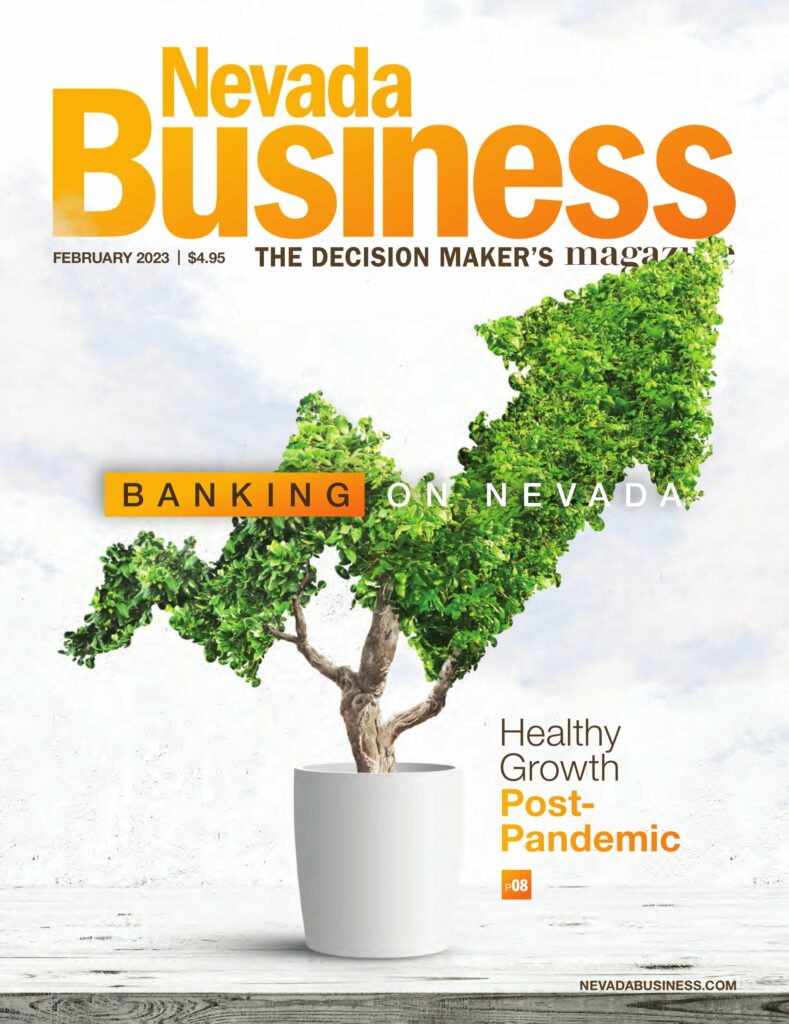
I’m happy to share with you an article I wrote for Nevada Business magazine: 2023 Marketing Trends: Brand is Everything. It ran in this month’s issue as a part of the magazine’s feature story: The Making of a Name: Branding with Intention.
The Differences and Importance of Landing Pages and Homepages
Are you confused about the difference between a landing page and a homepage? You're not alone! Many people use these terms interchangeably, but they actually serve very different purposes.
A homepage is the main page of a website and is typically the first page that visitors see when they arrive at the site. It provides an overview of the website and its main features and functions. The homepage often includes links to the most important pages on the site, as well as information about the company or organization that owns the website.
A landing page, on the other hand, is a standalone web page that is designed to serve a specific purpose. Unlike a homepage, which is meant to provide an overview of the website, a landing page is focused on a specific product, service, or offer. It is designed to provide detailed information about the product or service and to convince the visitor to take a specific action, such as making a purchase or filling out a form.
The importance of landing pages and homepages varies depending on the goals of the website. For example, if the goal of the website is to generate leads or sales, then a well-designed landing page can be crucial to the success of the site. Landing pages can be used to target specific keywords or phrases and to provide tailored information to different segments of the website's audience. This can help to increase the relevance of the website to the visitor and can improve the chances of converting them into a lead or a customer.
On the other hand, a homepage is important for providing an overview of the website and its main features and functions. It can help to build trust and credibility with the visitor and can provide a gateway to the rest of the site. A well-designed homepage can make it easier for visitors to find the information they are looking for and can improve the overall user experience of the website.
In summary, landing pages and homepages serve different purposes and are important for different reasons. A landing page is focused on a specific product, service, or offer and is designed to convince the visitor to take a specific action. A homepage, on the other hand, is meant to provide an overview of the website and its main features and functions. Both landing pages and homepages are important for a successful website, and it is important to consider the specific goals of the website when designing these pages.
If you’d like to discuss your needs regarding your website and various landing pages, or the bigger picture of your overall digital presence, we’d be happy to talk. Just give us a call or contact us.
Explainer Videos and Their Power
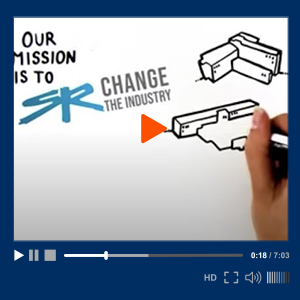
Have you ever seen the short, animated videos for companies on social media or been browsing the web and wondered how they were made? Those explainer videos are an extremely effective video marketing tool that is unique, but very detailed in the process. There are many varieties of explainer videos, and if you prefer not to use a whiteboard drawing video, you can go with a 2D animation video or a live action video. If you are not sure which one to choose from, there are even mixed media videos! At CIM, we have been planning, creating and using explainer video content for years.
This form of video marketing has proven to be extremely effective for clients we have worked with. The process begins with defining the project: What’s the topic and purpose? How long of a video are we planning? What’s the specific content? What’s the call to action? The process from start to finish requires a lot of clear communication and precise details (including creating a storyboard outlining the flow of content and visuals). We generally aim to create a “main” video, one that may run 60 to 120 seconds. We then plan to make additional shorter versions (say, 15 or 30 seconds) for other uses.
Here are a few examples of explainer videos we have previously done for clients.
These animated doodle videos have an extremely high ROI, as clients couldn’t express enough to us how powerful these videos have been to drive traffic to their businesses. This style of video can be very engaging with an educational feel, which is why we recommend considering animated videos to promote general branding or specific services that may seem overwhelming, but can be simplified with an animated video.
You may ask, what are the costs? Typically, a one-minute video can run about $6,000. While not inexpensive, that investment becomes less expensive when multiple length videos are also created. Clients have a collection of videos for their website, for social media paid advertising, for Over The Top (OTT) advertising on streaming channels (like Hulu), etc. These videos are an investment in engaging, educational content that can attract and direct clients to a business.
At CIM, we truly believe brand is everything, and these animated videos are powerful for branding efforts. If your company is considering an animated video, don’t hesitate to reach out and our team would be more than happy to explain the process more in detail.
"Video marketing is a powerful tool because videos can be repurposed over and over again to attract endless amounts of organic, social, and paid search traffic. A single video can be transformed into an audio podcast, blog post, infographic, slideshow, lead magnet, Facebook ad, email newsletter, Twitter post, landing page content, and more."
~Stephen Hockman
Utilizing Paid Advertisements on Social Media
We all can agree how far we have come with social media and everything that comes with it. Social media is used for various purposes, and one of the biggest takeaways from social media in our society today is social media advertising. Everyone with a social media account has participated in social media advertising, whether you realize it or not. Did you know that in 2021, social media ad spending was just over $40 billion by itself? It rose roughly 11% since 2020, which was a record breaking year.
The amount of money that businesses spend on paid social media ads has been climbing year over year, and predictions are that it won’t stop anytime soon. There is no doubt that social media advertisements are becoming a staple in marketing strategies across all businesses.
What is the difference between organic and paid social media advertising?
Organic social media advertising, CIMply put, is any social media activity without a paid promotion. Organic social can be beneficial because it is free, it can be used to manage your reputation and customer relationships by developing free campaigns and establishing trust by demonstrating transparency.
Paid social media advertising involves using specific ad tools catered to the social media platform to create, schedule, and post targeted ads that will reach a concentrated market. It is extremely important to invest in paid social media advertisements to reach a broader audience. You can additionally set an amount to spend per post and per month so you don’t exceed your budget.
Utilizing the power of paid and organic social media advertising.
Complete strategic marketing approaches combine organic and paid social media advertising to get the most traffic to your business. To make your marketing budget last further, experiment with organic social media and email campaigns, and then utilize paid social ads if it was successful. For both organic and paid social media posts, it is essential to keep track of analytics to determine what the most effective days and times to post.
Scaling your paid social media strategy.
Whether you put $50 or $500 behind a campaign, you will want a sustainable return on investment (ROI) that proves that the budget, effort, and resources you expended were all worth it for your business. Proving your ROI growth means that you will be able to scale campaigns in the future and the paid advertisements can fuel your success.
Once you have a solid understanding of the most beneficial paid ad social media platform for your business, you can begin to implement strategies and track all of your advertisements to realize the return on your investment.
Now that you are familiar with paid advertising on social media, how does one implement a marketing strategy to obtain the highest ROI?
At CIM, we work with clients operating in multiple industries. One thing that stays constant is investing in marketing and targeting the best ROI. There are so many facets and factors involved with paid advertising on social, that we have dedicated, certified team members whose sole purpose is to remain up-to-date on platforms and manage campaigns daily.
If you would like to discuss how to achieve a high return on investment by implementing a well-conceived, paid advertisement plan on social media to complement your organic advertisements, let’s talk about right-fit paid advertising campaigns for one or more social media platforms.
"When it comes to social media, your vibe attracts your tribe."